Date night ideas at home, with both phones away

A date night at home easily turns into any other night: dinner, the sofa, an episode, and both of you on your phones by the second one. It doesn't take a reservation to make it a date, only a plan made before you sit down and both phones put away somewhere else.
These eight are things to do with your partner at home that ask a little more of the two of you than the next episode, and give you an evening you will both remember next week. Most need only what is already in the kitchen or a drawer: flour and eggs, paper and two pens, a scarf, a torch.
Cook something together
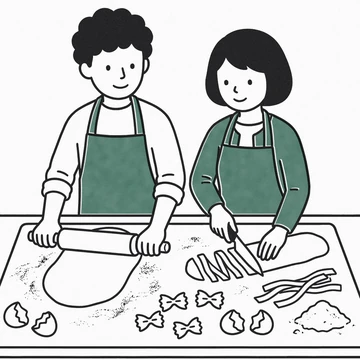
Make pasta by hand.
Knead 2 eggs into 200 g of flour and let it rest for half an hour while you make a sauce. Then roll half each thin with a rolling pin or a bottle, and cut your own shapes.
- Who
- The two of you
- Time
- About an hour
- You need
- Flour, two eggs, a rolling pin or a bottle
The half hour while the dough rests is yours: one of you makes the sauce, the other lays the table. Fresh pasta cooks in two or three minutes, so have the water boiling before you start cutting.
If it goes wrong: if the dough keeps shrinking back as you roll it, it needs more rest. Cover it and give it ten more minutes.
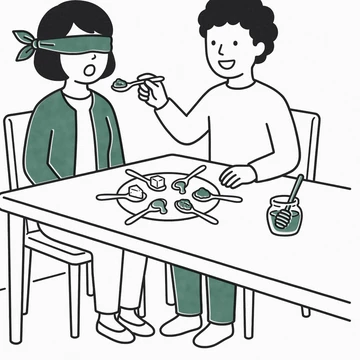
Guess it blindfolded.
A scarf over one pair of eyes. The other brings five spoonfuls of things you both eat: jam, cheese, honey, never chilli. Guess each, then swap.
- Who
- The two of you
- Time
- 15 minutes
- You need
- A scarf, teaspoons, food you both eat
Pick the five in secret while the other one waits at the table with the scarf on. Mix easy spoonfuls with ones that are hard to place, like honey next to yogurt with a pinch of cinnamon.
If it goes wrong: if every guess is right straight away, make the next round harder: two things on one spoon, or the same food warm and cold.
A game or two
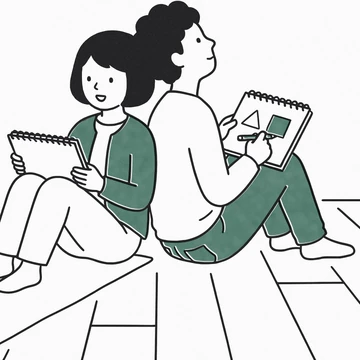
Draw what I describe.
Back to back. One of you draws something simple and describes it in shapes, never naming it. The other draws from the words. Compare, then swap.
- Who
- The two of you
- Time
- 15 minutes
- You need
- Paper, two pens
Start with something close at hand: a mug, a lamp, the house you live in. Then put the two drawings side by side and find the moment where they parted ways.
If it goes wrong: if the one drawing gets lost halfway, start again with something smaller, like a key, a cup or a leaf. Three or four shapes are enough for a first round.
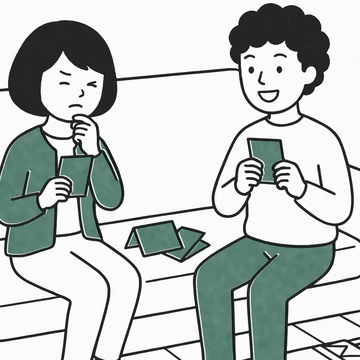
Guess my answers.
Each of you writes five questions about yourself, answers hidden: a dream job at ten, this week's worry. Take turns guessing; a miss earns the story.
- Who
- The two of you
- Time
- 20 to 30 minutes
- You need
- Paper, two pens
It's easy to think you already know each other's answers. Write your questions apart, so neither of you sees the other's list, and mix easy ones with the ones nobody has ever asked you.
If it goes wrong: if five questions won't come, start with these: a smell from childhood, the first album you bought, a place you would go back to tomorrow.
Look back, then ahead
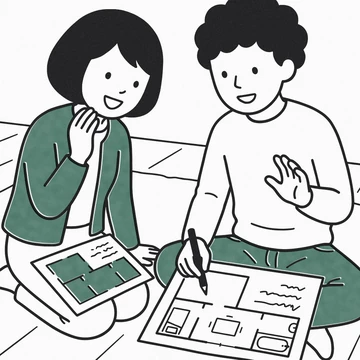
Childhood floor plans.
Each of you draws the floor plan of a home you grew up in. Then give each other the tour, with one good story for every room.
- Who
- The two of you
- Time
- 30 to 45 minutes
- You need
- Paper, two pens
Draw at the same time, without looking at each other's page, then swap for the tour. The one listening asks the questions: who slept where, where the phone stood, where you went to hide.
If it goes wrong: if one of you moved a lot, or would rather not go back to a home, pick another place you knew well as a child: a grandparent's flat, a holiday house.
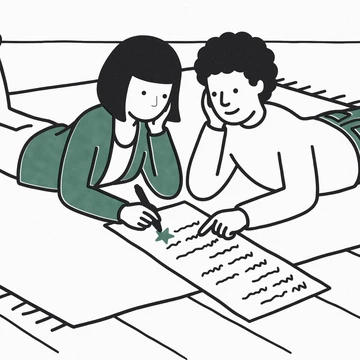
Make a someday list.
Together, write twenty things you want to do one day, from tiny to huge. Then each of you stars one you could do this month.
- Who
- The two of you
- Time
- 30 minutes
- You need
- Paper, a pen
Twenty sounds like a lot until the small ones start: a new breakfast, a walk you have never taken, a city you both keep mentioning. The star is the part that matters: each of you picks one you could really do this month.
If it goes wrong: if you stall at five, take turns, one thing each, and allow silly ones. The silly ones often end up starred.
Keep it going: put the list where you'll see it, and cross things off with the date.
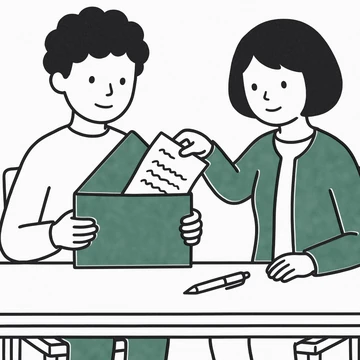
Write to us in a year.
Each of you writes a letter to you both, to open in a year: your days now, what you hope changes and what stays. Seal both in one dated envelope.
- Who
- The two of you
- Time
- 30 to 45 minutes
- You need
- Paper, two pens, an envelope
Write the two letters apart, in different rooms if you like, and don't read each other's. Put the date on the envelope and somewhere you will both see it next year.
If it goes wrong: a blank page is hard. Start with three things: what an ordinary Tuesday looks like now, what worries you, and what you hope stays the same.
Switch everything off
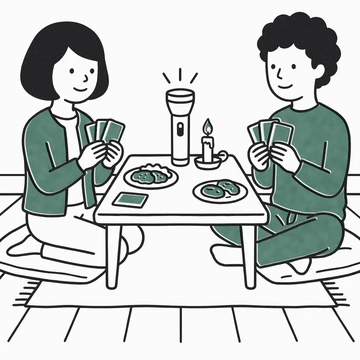
The power's out.
Lights off, a torch on, and nothing that plugs in until the power comes back. Eat, talk and play by torchlight. Candles too, if you never leave them alone.
- Who
- The two of you
- Time
- A whole evening
- You need
- A torch
Agree on the rule before the lights go out: nothing that plugs in, phones included, until one of you calls the power back on. Dinner by torchlight already counts as a plan.
If it goes wrong: an evening is long without a plan. Have one game and a snack ready before the lights go off.
Making the switch
Choose the idea earlier in the day, not on the sofa with the remote in your hand. Take turns, so the same one of you isn't always the one who plans.
Then set out what it needs before dinner: the flour and eggs on the counter, the paper and two pens on the table, the scarf over a chair, the torch by the light switch. Put both phones in a drawer or another room, so the evening has started before anyone reaches for the TV.
When one of you is always on the phone
It's rarely about one person: work, family and friends reach both of you through the same screen, and picking it up is an easy habit to fall into. "You're always on your phone" tends to start an argument, not an evening. Ask for one evening with a plan in it instead: "Shall we make pasta tonight, both phones in the drawer?" is easier to say yes to than a rule.
Put both phones away at the same time and in the same place, so it's something you do together, not something one of you gives up for the other. If one of you has to stay reachable, leave that phone in the hall with the sound on: a call still gets through, and the phone stays out of both your hands.